
self-drive tours in italy
Our Self-Drive Tours in Italy
NORTHERN ITALY
SOUTHERN ITALY
TUSCANY
ALPS
Why Travel to Italy for a Self-Drive Tour?
Italy’s major cities are well served by rail. The country between them is not. A self-drive tour in Italy is built for that second half of the trip: the Alpine passes, the Tuscan hill towns and the southern coast, reached on roads worth driving for their own sake, across a season that runs longer the further south you go.
where to drive in italy?
Italy’s regions differ more than its size suggests, so most self-drive itineraries combine two or three rather than staying in one.
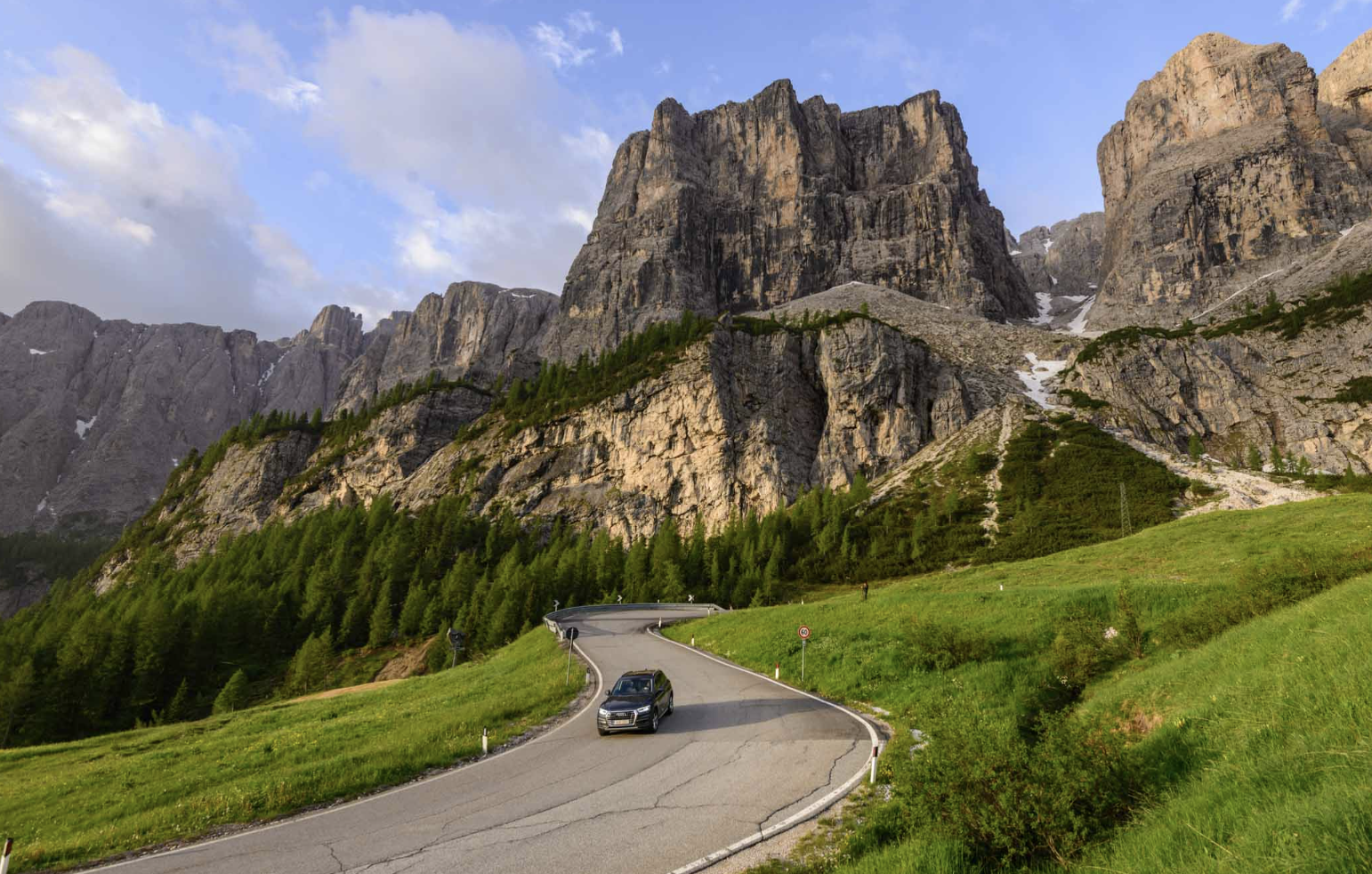
- The Dolomites: pale limestone peaks rise straight out of the meadows around Cortina d’Ampezzo, Alta Badia and Val Gardena, where many villages still speak German or Ladin. The roads climb in tight runs of hairpins between passes. Four of them, the Sella, Pordoi, Campolongo and Gardena, ring the Sella massif in a single loop of about 55 km.
- The Italian Lakes: at the foot of the Alps, Lake Como and Lake Garda bring villas, gardens and lakeside towns such as Bellagio and Varenna. The shore roads are narrow and slow, and the lake ferries often make the better crossing.
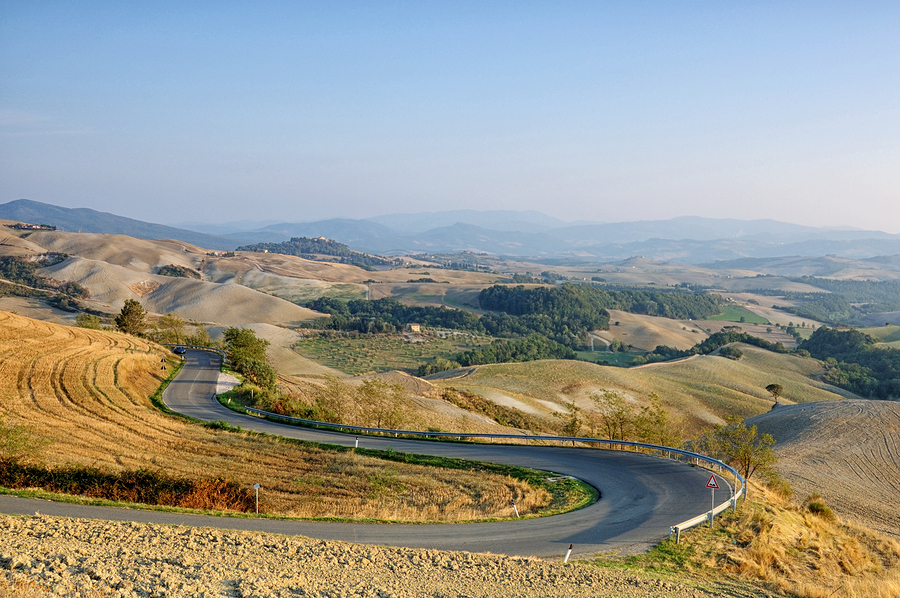
- Tuscany: a slower rhythm of rolling hills, cypress lines and hilltop towns. In the Val d’Orcia, Pienza, Montalcino and Montepulciano sit within half an hour of each other, and the Chianti hills fill the country between Florence and Siena. Many estates are reached by strade bianche, unpaved white gravel roads that are easy to drive but slow.
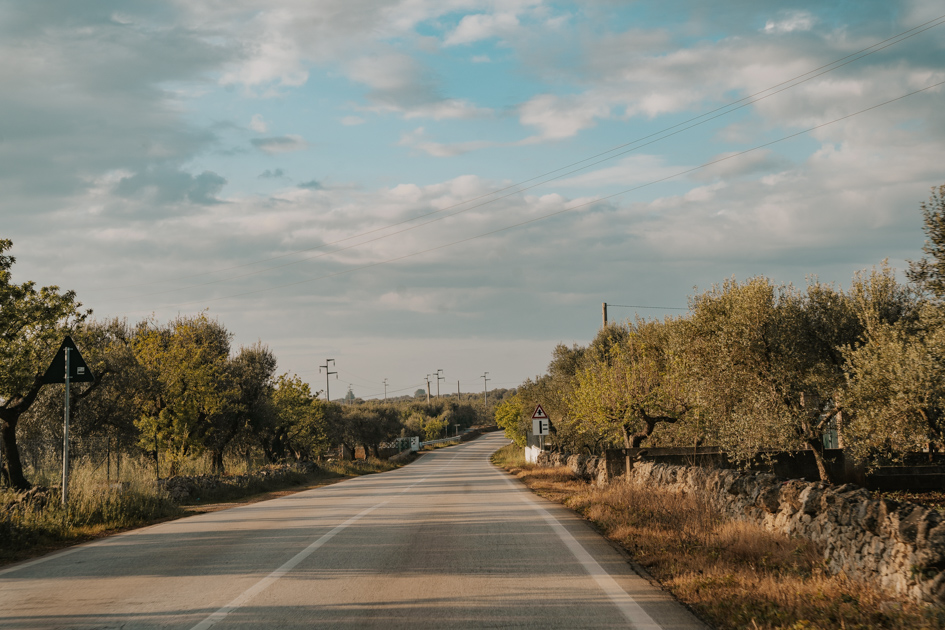
- Amalfi Coast and Puglia: on the Amalfi Coast, cliff and sea, with Positano, Amalfi and Ravello stacked above the water. It is best enjoyed from one base, with the car used for the coast road and day trips. Further east, Puglia and neighbouring Basilicata flatten into olive groves, from the trulli of Alberobello and the white town of Ostuni to the cave dwellings of Matera. The region’s masserie, fortified farm estates now run as hotels, are reached on quiet country roads.
Distances between regions are longer than they look: Cortina to Florence is about four and a half hours, and Florence to the Amalfi Coast about five. Most itineraries pair neighbouring regions and use the train for the long leg in between.
the best driving roads in italy
Each of Italy’s great drives belongs to its region, and each is a destination in its own right rather than a way of getting somewhere.
- The Great Dolomites Road (Grande Strada delle Dolomiti): around 110 km from Bolzano to Cortina d’Ampezzo over the Costalunga, Pordoi and Falzarego passes. The scenery changes at every col, from forest to bare rock walls and back.
- The Stelvio Pass: at 2,757 m, the highest paved pass in Italy, climbing from the Val Venosta side in 48 numbered hairpins stacked up the mountainside. The descent towards Bormio is gentler, with the Ortler massif across the valley.
- The Amalfi Coast Road (SS163 Amalfitana): about 50 km from Vietri sul Mare to the Sorrento peninsula, cut into the cliff above Positano and Amalfi. It is slow going: narrow, shared with buses, and busiest from June to September.
- The Chiantigiana (SR222): links Florence and Siena through Greve, Panzano and Castellina in Chianti, with vineyards on both sides and wineries a short turn off the road.
None of them works from a train window. All of them are best driven early: on summer weekends the Alpine passes fill with motorbikes and cyclists, and by mid-morning the Amalfi road is a queue.
when to drive in italy?
Italy's driving season depends on altitude as much as on the calendar. The highest roads in the north close for winter: the Stelvio Pass, at 2,758 m the highest motor pass in Italy, usually opens in late May and closes in early November. The south keeps a longer season. The Amalfi Coast and Puglia are pleasant from spring and stay mild well into autumn, after the summer crowds on the coast have thinned. Tuscany sits between the two, with spring and early autumn the most comfortable months and July and August hot inland.
Italy's Frecciarossa trains link Milan, Florence, Rome and Naples faster than a car can. Historic centres such as Florence, Rome and Siena sit inside ZTLs, limited traffic zones where cameras fine unauthorised cars, and Venice's centre has no cars. We plan the car around the countryside, delivered as you leave the city. Luxury self-drive tours in Italy suit travellers who want the land between the cities.