
self-drive tours in spain
Our Self-Drive Tours in Spain
ANDALUSIA
BASQUE COUNTRY
MADRID & CASTILE
NORTHERN SPAIN
PORTUGAL & SPAIN
Why Travel to Spain for a Self-Drive Tour?
Spain’s two great driving regions sit at opposite ends of the country. In the north, the Basque coast and the vineyards of La Rioja are green, Atlantic and close together. In the south, Andalusia’s hill towns and mountain roads rise behind the Mediterranean. More than 900 km separate them, and Europe’s largest high-speed rail network and a mostly toll-free motorway system cover that distance well.
A self-drive tour in Spain is built for what lies off both: the coast roads, wine villages and mountain passes that no train reaches.
where to drive in spain?
Northern and southern Spain look like different countries, and most Spain road trips give each its own stretch of the itinerary.
- The Basque Country: the coast between San Sebastián and Bilbao is green, steep and often misty, with roads winding between fishing ports such as Getaria and wooded hills behind. Distances are short, so a day can cover the coast and still end at the table.
- La Rioja: about 90 minutes south of Bilbao, the land opens into vineyards along the Ebro valley, with the Sierra de Cantabria as a backdrop. The driving is gentle, and the stops are bodegas.
- The Spanish Pyrenees: from Navarre east through Aragon to Catalonia, the mountains along the French border hold some of Spain’s highest roads.
- Andalusia: dry hills, olive groves as far as the eye can see, and three cities each a couple of hours apart. Seville sits on the wide plain of the Guadalquivir, and Granada below the Sierra Nevada. Between them, Ronda stands on the edge of its gorge.
spain's best roads
Spain’s best drives come in two kinds: high mountain roads in the Pyrenees, and short, slow coast and wine roads in the Basque Country and La Rioja.
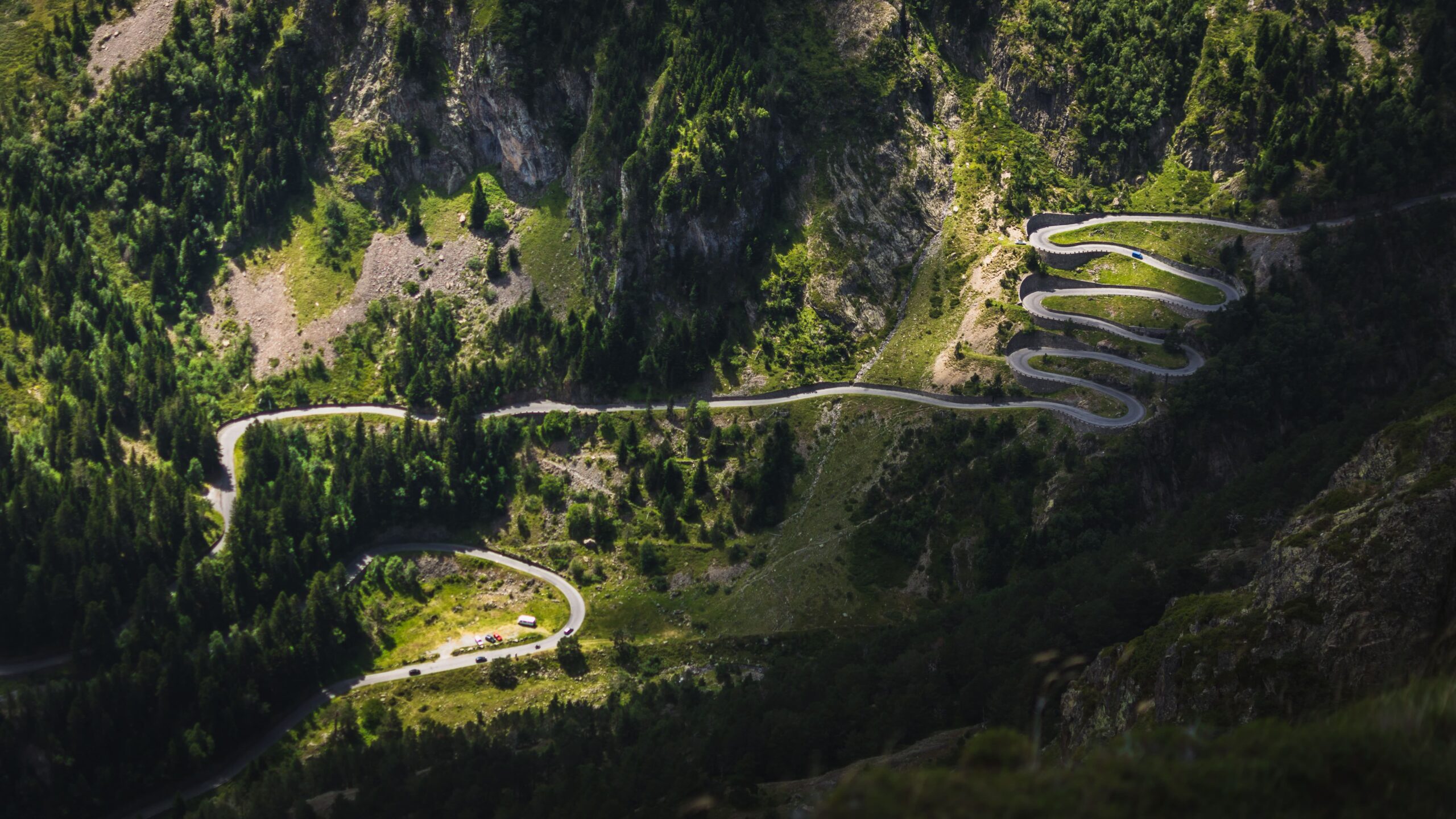
- The Bonaigua Pass (C-28): the road into the Val d’Aran climbs to 2,072 m, one of the highest paved passes in the Pyrenees, in long switchbacks above the treeline.
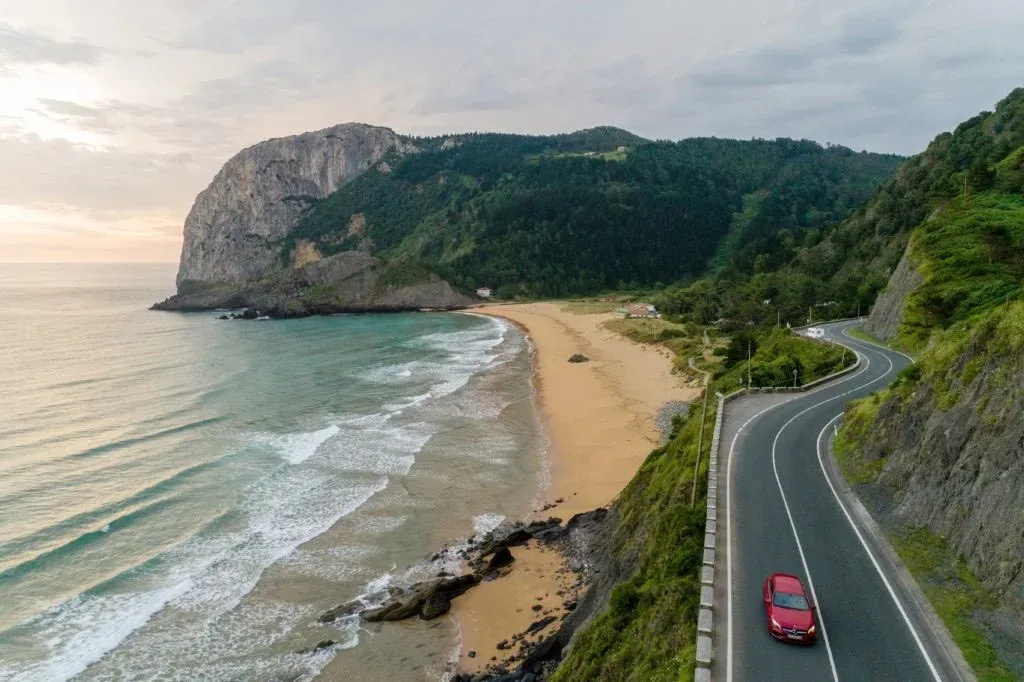
- The Basque coast road: between Zarautz, Getaria and Zumaia, the road runs along the cliffs above the sea, past the layered rock strata of the Basque Coast Geopark.
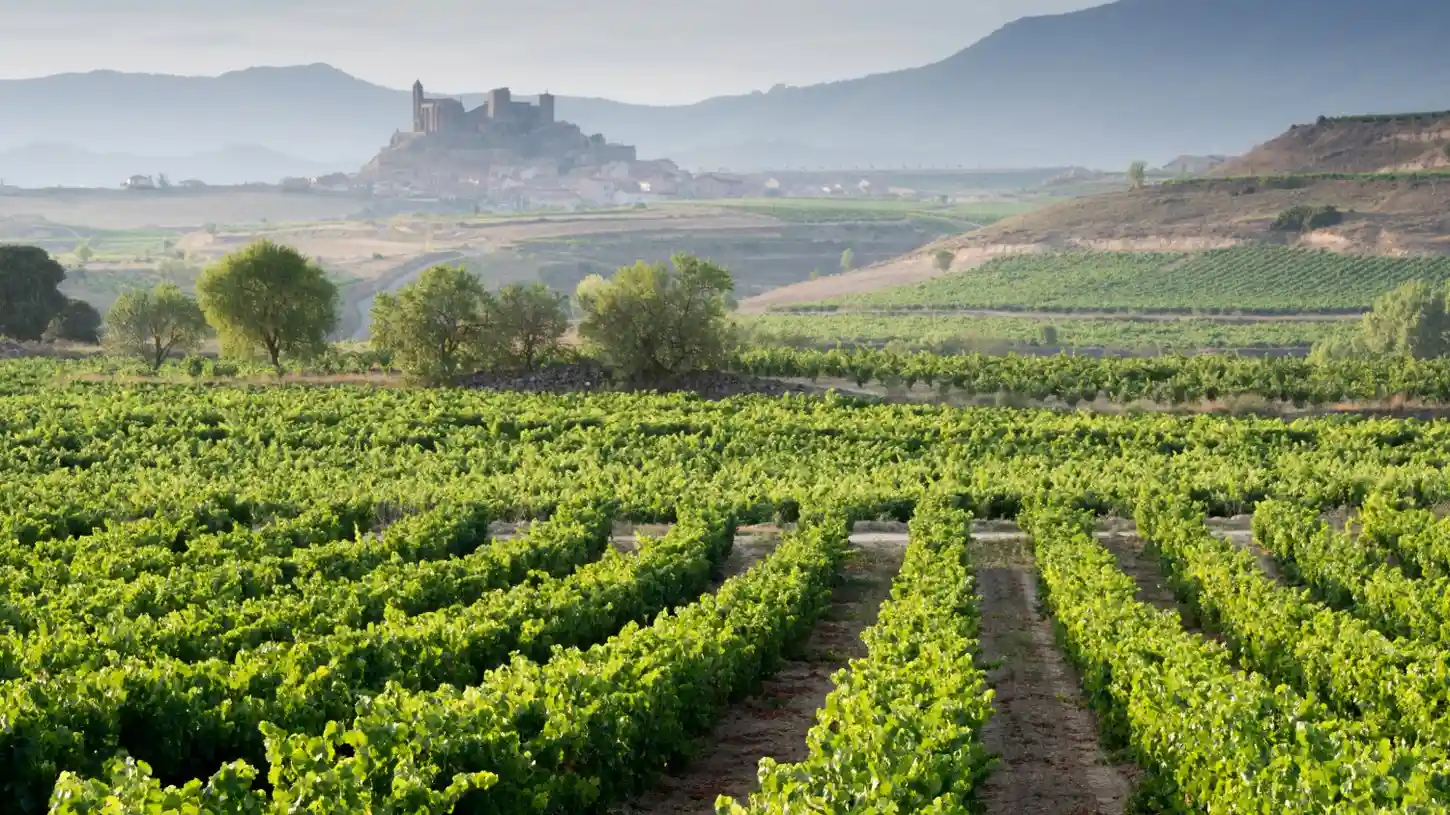
- The Rioja wine roads: the back roads between Haro, Briones, Laguardia and Elciego link bodegas a few kilometres apart, with the Sierra de Cantabria across the vines.
- Ronda to San Pedro de Alcántara (A-397): about 50 km from the gorge town down through the Serranía de Ronda to the coast near Marbella, a sequence of long bends with the sea opening up on the descent.
- The white villages route: in the Sierra de Grazalema, the road between Zahara de la Sierra and Grazalema crosses the Puerto de las Palomas at about 1,350 m, in tight hairpins above the turquoise Zahara reservoir.
Most of them take no more than a morning. That suits the Spanish day: on the road early, lunch from two o’clock, and the hottest hours of the afternoon spent anywhere but the car. The high Pyrenean passes are the exception, with snow from late autumn to spring and the best driving between June and October.
when to drive in spain?
The best season depends on which half of the country you mean. Andalusia suits spring, autumn and the milder winter months, when the cities are comfortable and the roads around Ronda are quiet. In July and August, inland Andalusia often passes 40°C, so a summer trip is better pointed north, where the Basque coast stays cooler and greener, and September brings the grape harvest in La Rioja. For month-by-month conditions, see our guide to the best time to visit Spain.
A trip that pairs the Basque coast and the Rioja vineyards with the white villages and mountain roads of Andalusia covers Spain’s full range, with each region driven in the season that suits it.