
self-drive tours in austria
Our Self-Drive Tours in Austria
ALPS
AUSTRIA
Why Travel to Austria for a Self-Drive Tour?
Austria builds some of its mountain roads for the drive alone. The Grossglockner and the Timmelsjoch are high alpine roads in the Austrian sense: privately run, ticketed and open only from late spring to autumn, with viewpoints and car parks laid out along the way. Around them, the Tyrolean Alps, the lakes of the Salzkammergut and Carinthia, and the Danube vineyards of the Wachau all lie within a day’s drive of each other. That combination is what a self-drive tour in Austria is built around.
where to drive in austria?
Austria runs east from the high Alps to the Danube, and the landscape softens the further you go.
- Tyrol: Innsbruck sits in the Inn valley beneath the Nordkette, with a cable car from the city centre to above 2,000 m. Side valleys such as the Ötztal and the Zillertal run south towards the glaciers and the Italian border. East Tyrol, cut off by the Hohe Tauern, opens out around Lienz on the sunnier south side.
- Salzburg and the Salzkammergut: north of the Grossglockner, the road drops to Zell am See on its lake. East of Salzburg, the Salzkammergut is a district of lakes and steep, wooded shores, from the Wolfgangsee to the Hallstätter See. Hallstatt itself is busy in summer, and cars stay in the car parks above the village.
- Carinthia: south of the main ridge, Carinthia faces Italy and Slovenia, with a milder climate and lakes warm enough to swim in by July: the Wörthersee, the Millstätter See and the quieter Weissensee.
- The Wachau and Vienna: to the east, the Danube cuts through the Wachau, a valley of terraced vineyards between the baroque abbey at Melk and the old town of Krems, known for its Riesling and Grüner Veltliner. Vienna is about an hour further east.
Driven in either direction, a week to ten days links the Alps, two lake districts and the Danube, with no transfer much longer than three or four hours.
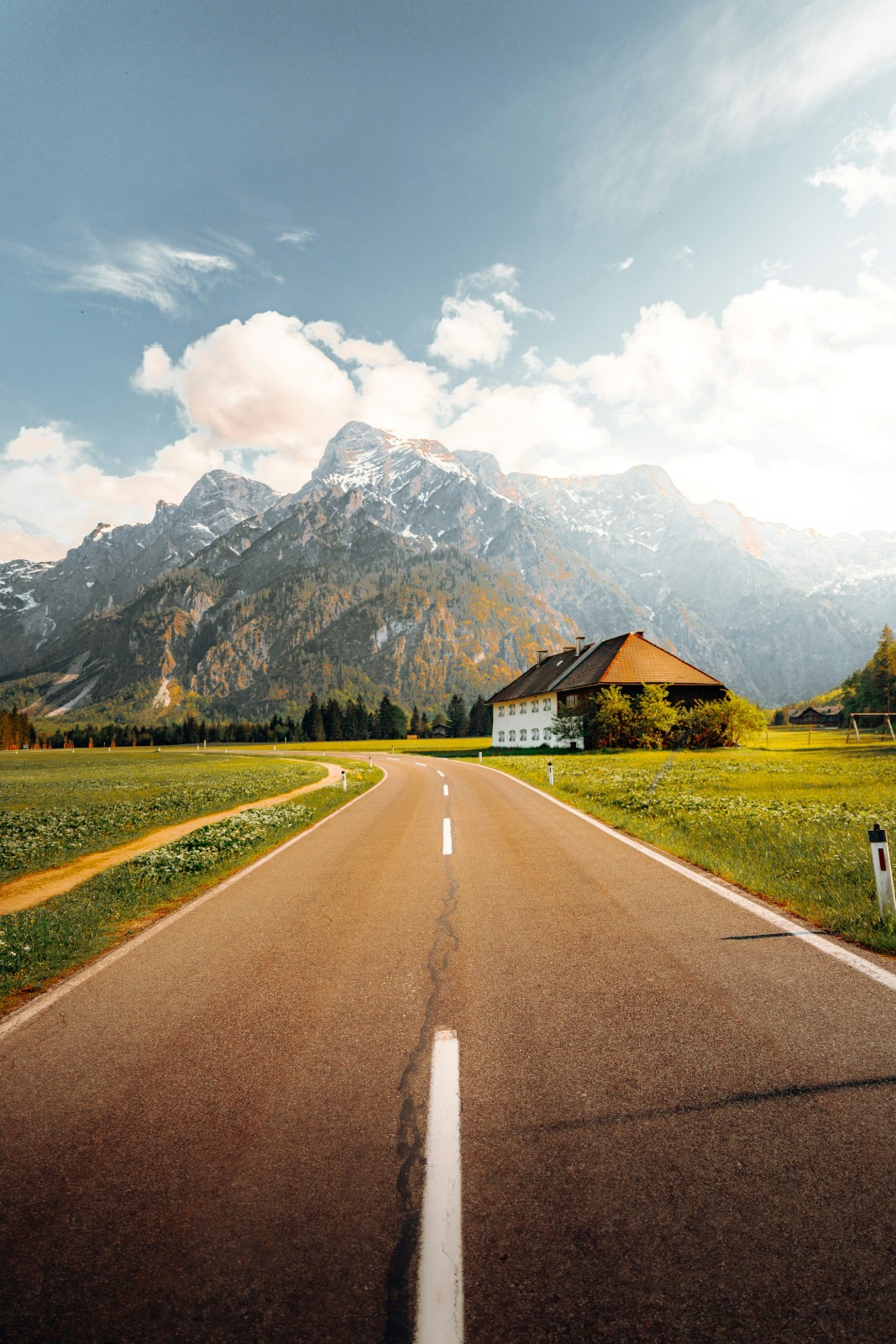
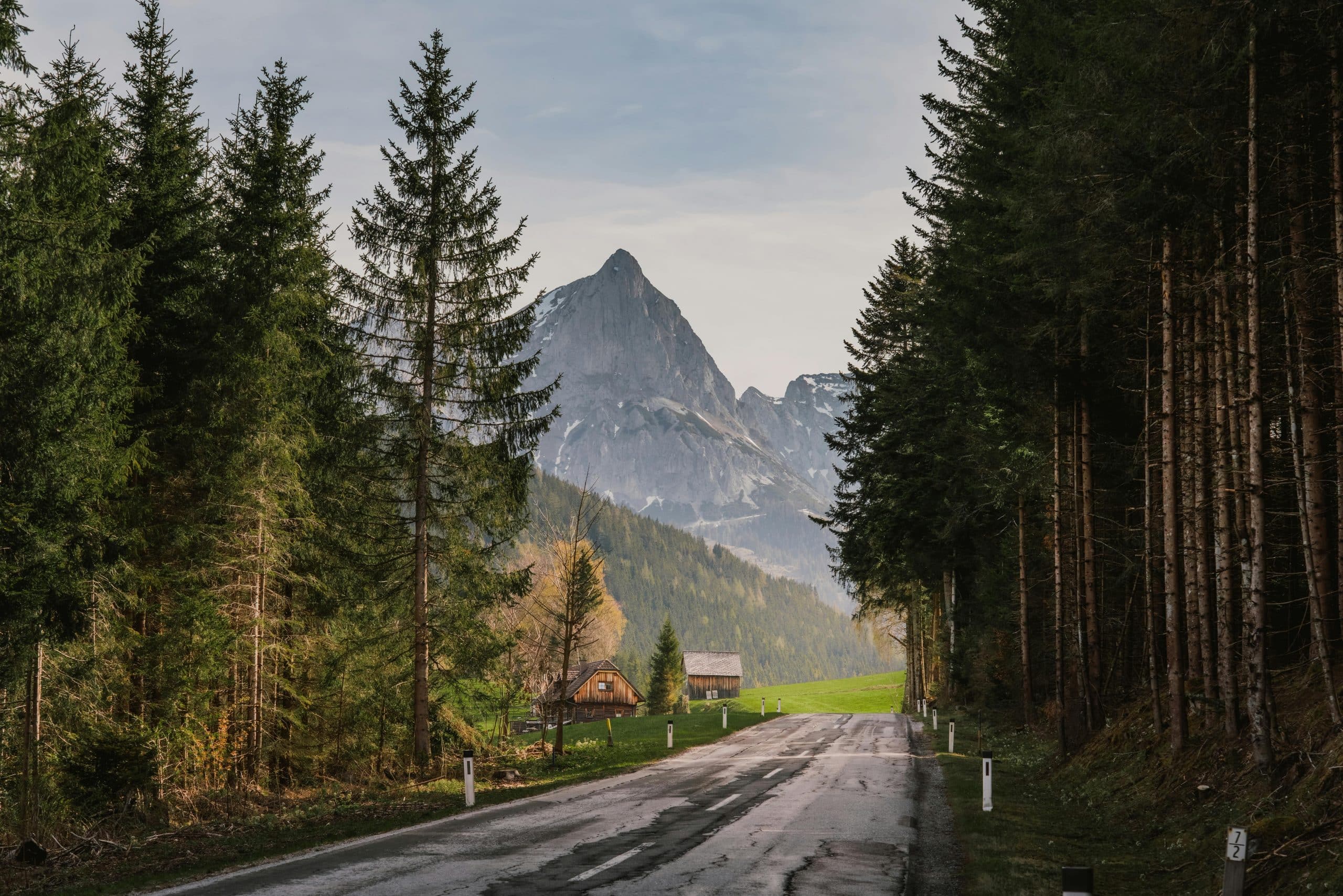
austria's best roads
Austria’s best drives are its high alpine roads: privately run, with set opening hours and a toll of their own on top of the motorway vignette.
- The Grossglockner High Alpine Road: 48 km and 36 bends between Fusch in Salzburg and Heiligenblut in Carinthia, crossing the Hochtor at 2,504 m. Side roads lead up to the cobbled Edelweissspitze at 2,571 m and to the Kaiser-Franz-Josefs-Höhe, facing the Grossglockner, Austria’s highest peak, and the Pasterze glacier below it.
- The Timmelsjoch High Alpine Road: from the Ötztal past Obergurgl to 2,474 m on the Italian border, then down into the Passeier valley in South Tyrol towards Merano. It is narrower and quieter than the Grossglockner, and steep on the Italian side.
- The Silvretta High Alpine Road: linking the Montafon in Vorarlberg with the Paznaun valley in Tyrol over the Bielerhöhe at 2,032 m, past the Silvretta reservoir and a tight run of hairpins on the western side.
All three depend on the weather. In cloud, the views disappear, so a clear day on the Grossglockner is worth rearranging an itinerary around.
when to drive in austria
The high alpine roads set the season. The Grossglockner usually opens in early May and closes in early November, while the Timmelsjoch and the Silvretta open later, around June, and close in October. July to September is the most reliable window, and September is quieter.
Lower down, the lakes of Carinthia are at their best in July and August, and the Wachau is at its best in April, when the apricot trees blossom, and during the autumn harvest. In winter, the motorways and valleys stay open for the ski season, but the high alpine roads do not. For month-by-month conditions, see our guide to the best time to visit Austria.