self-drive tours in switzerland
Self-Drive Tours in Switzerland
ALPS
SWITZERLAND
Why Travel to Switzerland for a Self-Drive Tour?
In Switzerland, a few hours’ drive can start among the German-speaking lake towns around Lucerne, cross the Gotthard at 2,106 m and end under palm trees on an Italian-speaking lakeshore. The trains link the cities better than any car, but the high pass roads are where driving comes into its own, and they are the reason a self-drive tour in Switzerland is worth doing.
where to drive in switzerland?
Switzerland is divided by language as much as by mountains. On the road you notice each border: the place names, the architecture and the food change as you come down the far side of a pass.
- Central Switzerland: around Lucerne and Andermatt, German-speaking lake and mountain country. The arms of Lake Lucerne wind between Rigi and Pilatus, and Andermatt sits where the Gotthard, Furka and Oberalp passes meet, the natural base for the high roads.
- The Valais: over the Furka, the Rhône valley runs west past the dark timber villages of the Goms, before the canton turns French around Sion. Vineyards climb the south-facing slopes, side valleys lead up to Zermatt and Saas-Fee, and the valley ends at Lake Geneva, where the Lavaux terraces drop to the water between Lausanne and Montreux.
- Ticino: south of the Gotthard, the country becomes Italian-speaking, with stone villages, chestnut woods and a noticeably milder climate. Palms line the lakeshores at Lugano and at Locarno on Lake Maggiore, and side valleys such as the Verzasca run up into the mountains behind.
- Graubünden: in the east, Switzerland’s largest canton, where Romansh is still spoken. The Engadin valley around St. Moritz sits high and open at about 1,800 m, with a chain of lakes and villages of painted houses, reached over the Julier or Albula passes.
Distances between them are short. Lucerne to Lugano takes about two hours by motorway, so a week can comfortably cover three of the four regions.
switzerland's best roads
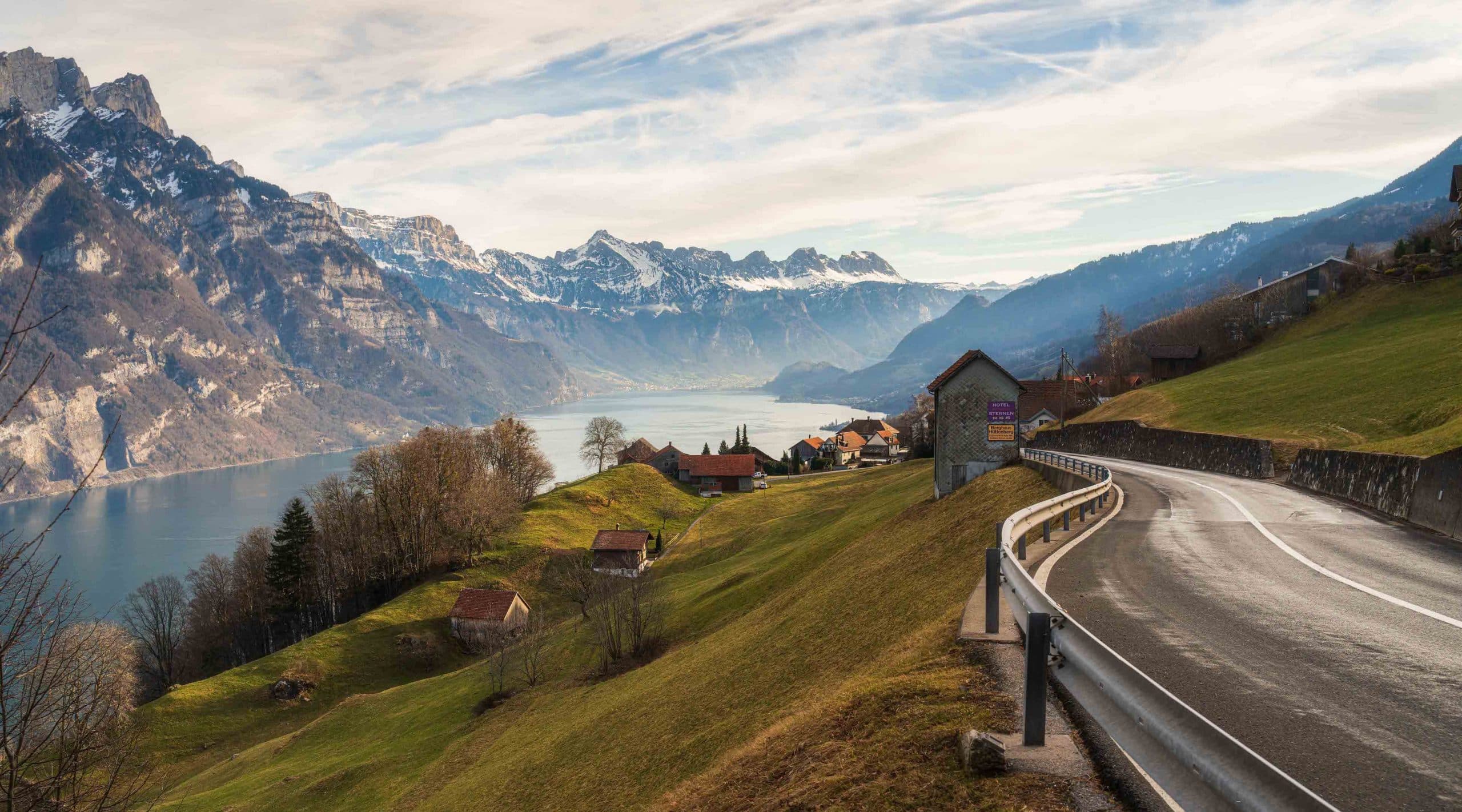
The great Swiss passes cluster in two areas, around Andermatt and in Graubünden, so two bases can cover most of them without long transfers in between.
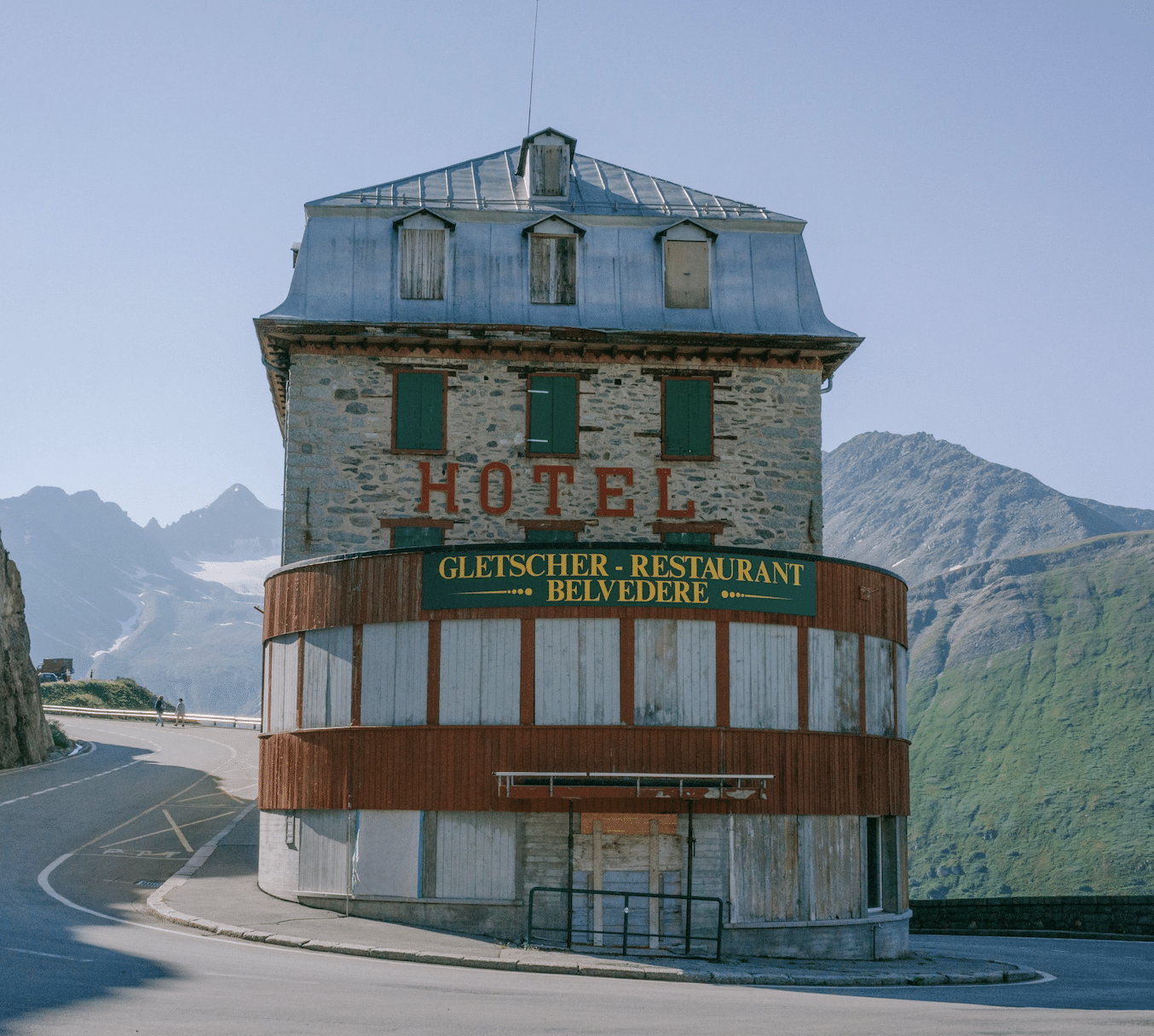
- The Furka, Grimsel and Susten loop: from Andermatt, about 120 km over three passes and through three cantons (Uri, Valais and Bern) in a day. The Furka climbs past the Rhône Glacier, the Grimsel crosses bare granite and dammed reservoir lakes, and the Susten sweeps down towards the Bernese Oberland in wide, open curves.
- The Gotthard and the Tremola: the old road over the pass descends to Airolo on the Tremola, a cobbled run of tight hairpins stacked down the mountainside. The motorway tunnel below is the quick way to Ticino, but the pass road is the drive.
- The Bernina Pass: from the Engadin over 2,328 m, past the glaciers of the Bernina range, then down through the Val Poschiavo to Tirano in Italy. It pairs naturally with a return via the Maloja Pass and Lake Como.
Early morning is the best time on all of them, before the coaches and motorbikes arrive. When the Furka is closed, a car train runs beneath it between Realp and Oberwald, so the route stays open even when the road does not.
when to drive in switzerland?
In Switzerland, the season is set by the passes rather than the calendar. The highest roads around Andermatt, including the Furka, Grimsel, Susten and the Gotthard pass road, usually open between late May and June and close around the end of October. July to September is the most reliable window.
June can still bring walls of snow at the summits. September and early October are quieter, and the larches of the Engadin turn gold in mid-October.
In winter, the motorways and valleys stay open, and in Graubünden the Julier, Maloja and Bernina passes are generally kept clear all year. Car trains under the Furka, the Vereina and the Lötschberg keep the main routes connected when the high roads close. Ticino, south of the Alps, is mild enough for spring and autumn driving when the north is still cold.